What does fashion lack? “Microcontrollers” – this states dutch fashiontech designer Anouk Wipprecht on her website. And if you have a look at her portfolio, you will most certainly agree.
Intimacy for example is the name of a dress which thanks to smart e-foils becomes transparent based on personal interactions.
https://vimeo.com/29952304
Another one is the Pseudomorphs dress: At first an innocent white, it soon becomes unique and quite colorful, when ink trickles out of diverted medical equipment and tubes to find its way down the dress, creating a new pattern every time.
https://vimeo.com/44149906
Confession - I hate huge electronics stores. You can find everything there, but there’s one big catch: the people at these kinds of stores are usually unhelpful and mean.* On my first electronics store adventure I didn’t have a perfectly detailed list of what I needed and it ended something like this: I almost cried,** left in a rage, and questioned my Arduino abilities.
When I signed up to attend Open Tech School’s Physical Computing Club 1.0 I had instant nightmares of the electronics store. The computing club session was about audio and Open Tech School hosted it at the FabLab in Berlin. I thought that I needed all new components and imagined myself walking through each unmarked aisle staring - eyes glazed - at thousands of not-quite-right tiny electronics.
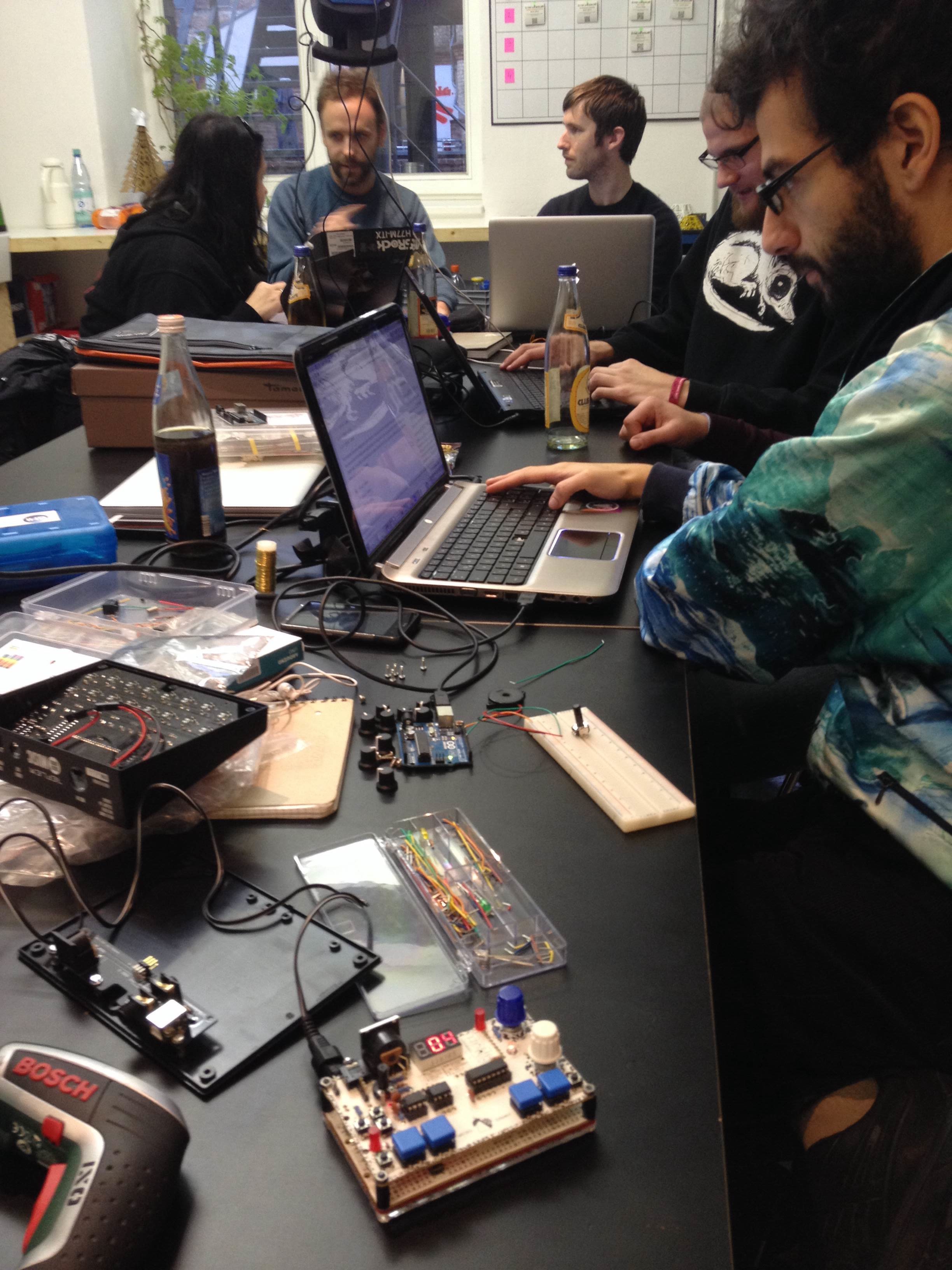
Open Tech School's Physical Computing Club
Instead of facing fear head-on, I ignored the store and woke up on Sunday with no new parts in my toolkit. Slightly worried, I blindly chucked my Fritzing Creator Kit and computer in my bag and headed off toward the meetup.
At FabLab I shyly sat down and started setting up my work area. Arduino mounting board - check. Instruction book - check. Wire components - check. Resistors - check.
I flipped through the Creator Kit book for ‘audio’ and found an activity within a minute. I felt immense victory:
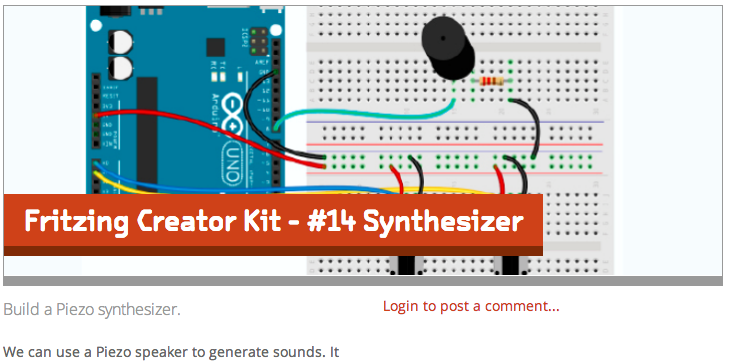
I imagined all the parts that I didn’t have and an electronics expert patronizingly waving an “I told you so” finger at me. I persevered and started assembling the project.
To my surprise, all the supplies were in the kit. All of them!
I was ready to go. With the book in my lap, the Fritzing sketch on my screen, I came up with this set-up in about 10 minutes:
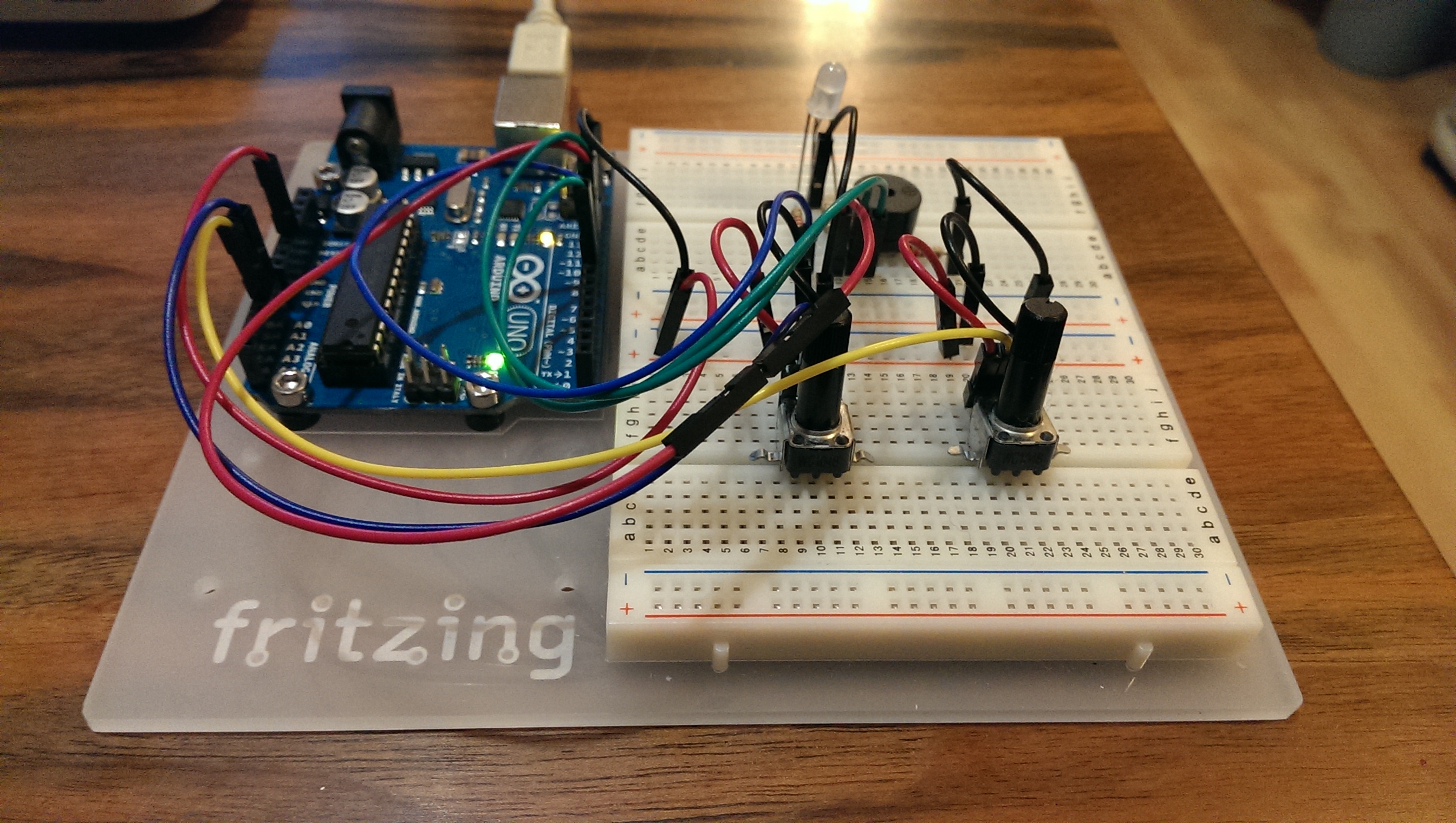
Two potentiometers and a Piezo
10 minutes!
Then the fun part began. I used the potentiometers to alter the tone of the sound and the frequency that the tone played. The result was quick and rewarding:
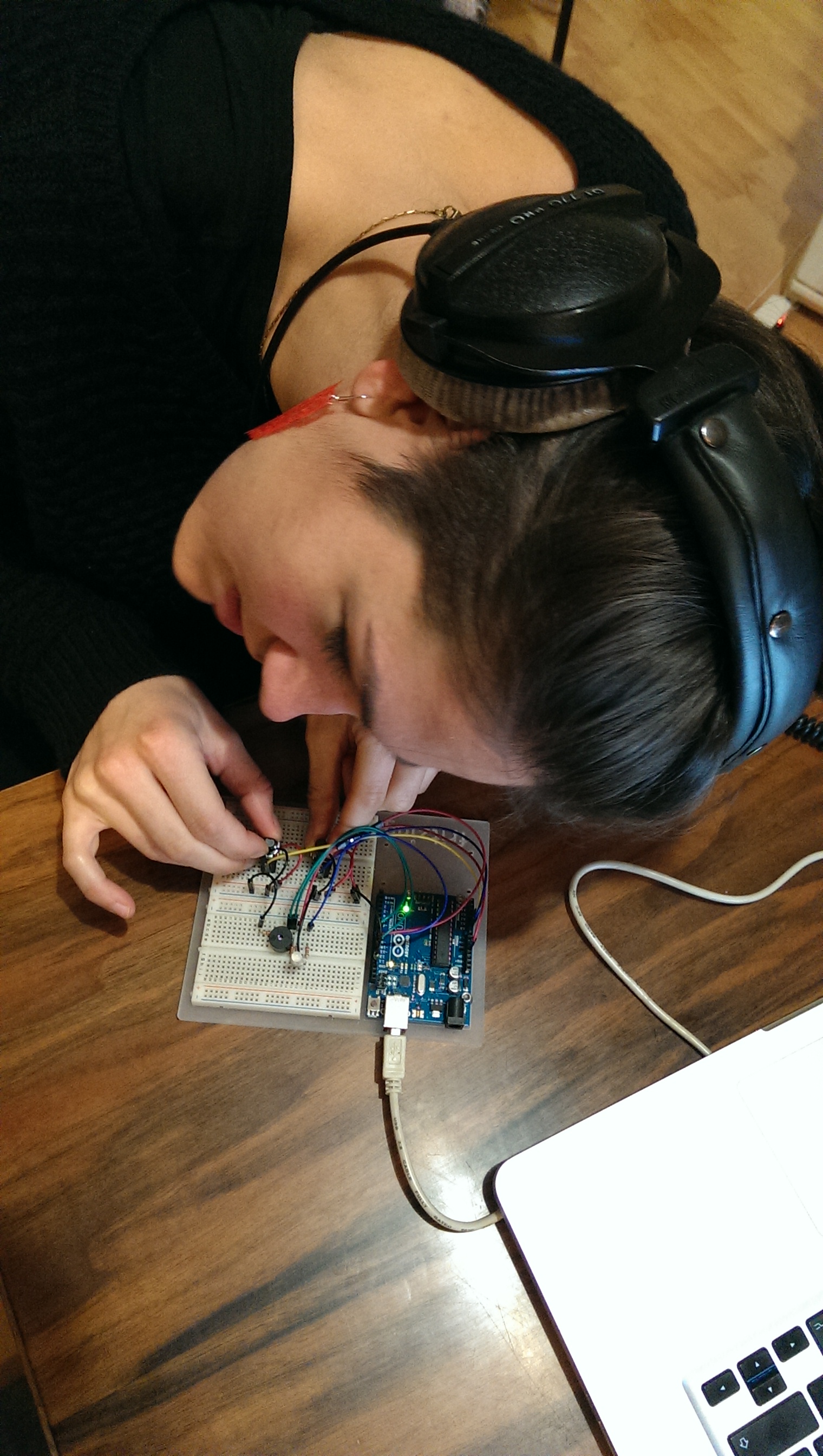
Me as a professional DJ
With the Creator Kit, I was able to head to a meetup without any preparation and jump into the topic at hand. From there I could experiment and play with other parts of the kit. Huge electronics stores are still intimidating and frustrating, but the Creator Kit helped me jump into a hackday without any extra preparation.
*Mad props to the nice old man who always smiles and is patient with me. There is good in the world, after all.
**Johanna actually cried.
You can learn more about Open Tech School and Physical Computing Club at https://www.physicalcomputingclub.org and follow them on Twitter at @PhysCompClub and @OTS_BLN.
Hey Fritzing-folks!
Good news! We have updated the Fritzing website and made it look nice and shiny. And even better: You can now also check out the brand new Fritzing 0.8.5b, released on Dez. 15, 2013.
[gallery columns=”4” link=”file” ids=”1010,1007,1009,1008”]
Here is a list of changes to the new release:
- Fritzing gets a facelift! (special thanks to Christian and Fabian)
- new Welcome view
- new Fritzing Creator Kit examples (in both English and German)
- Tips and Tricks updated
- First Time Help now a separate dialog
- binaries built using Qt 4.8.5
- updated Dutch translation (thanks Dave)
- updated German translation
- new parts:
- Breadboard BB 301 (contributed by Jeremy)
- RGB LED WS2812
- bug fixes:
- Mac OSX Mavericks Parts Bin Hover crash
- Saving files with custom parts: sometimes the fzp did not list the latest svg files
- Boost 1.54 bug no longer crashes Fritzing
- Many part tweaks
This is a high-level summary of changes between each release. If you’re interested in the detailed changes, take a look at the individual code changes.
How can you make music visible? Jihye Kang and Victor Gonzalez explored this question and developed the Melodic Scribe, which drops paint on porcelain plates according to the melodies and notes of the music played.
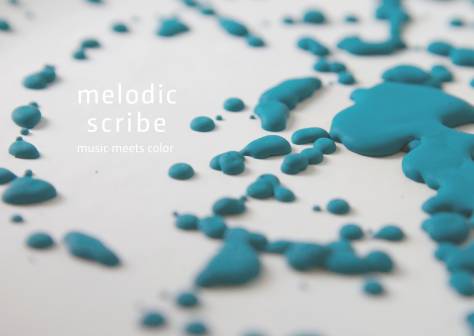
Every platte pattern is unique like the music is with every different musician.
melodic scribe #1 from Jihye Kang on Vimeo.
You can access the Fritzing Data and Arduino Code on the Fritzing Website and build one yourself!
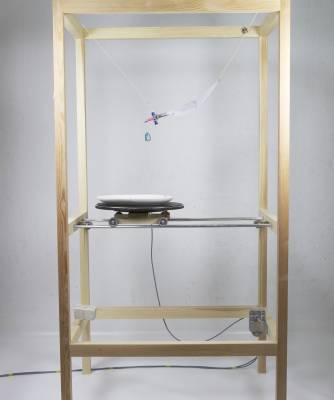
A project of the FH Potsdam, class “Musical Interfaces” by Stefan Hermann, 2012/13.
melodic-scribe.jux.com
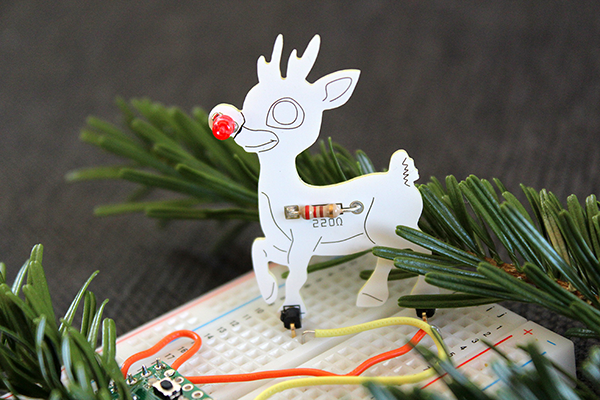 After a great year of running the worlds easiest PCB creation and fabrication service we have to announce, that our last Fab round this year will be closed this Sunday 15th of December and be shipped the 20th. Next year Fritzing Fab will be closed the 7th of January and be shipped one week later.
Thank you all for using this service, which was considered as »impossible« just some years ago.