Wow! That is an awesome idea!
In 2012 alone Singapore had to face over 2100 cases of drunk driving, some with disastrous endings. The club Zouk engaged an agency to keep their guests from driving when they definitely should not drive anything anymore by themselves and they managed to come up with a fun way to do so: the Pee Analyser.
https://youtu.be/e2OdA7DUOAQ
Former parking cards were replaced with RFID cards. As soon as the drivers used the toilet the cards got activated through a urinal testing device that measures the alcohol level in the urine. If they were hammered, they got the strong recommendation to take a taxi or could even use the clubs’ drive home service.
"It was the hardest thing I’ve ever done, and I’ve done some pretty difficult things, like military service." - Stefan, Fritzing Coordinator, on working with kids.
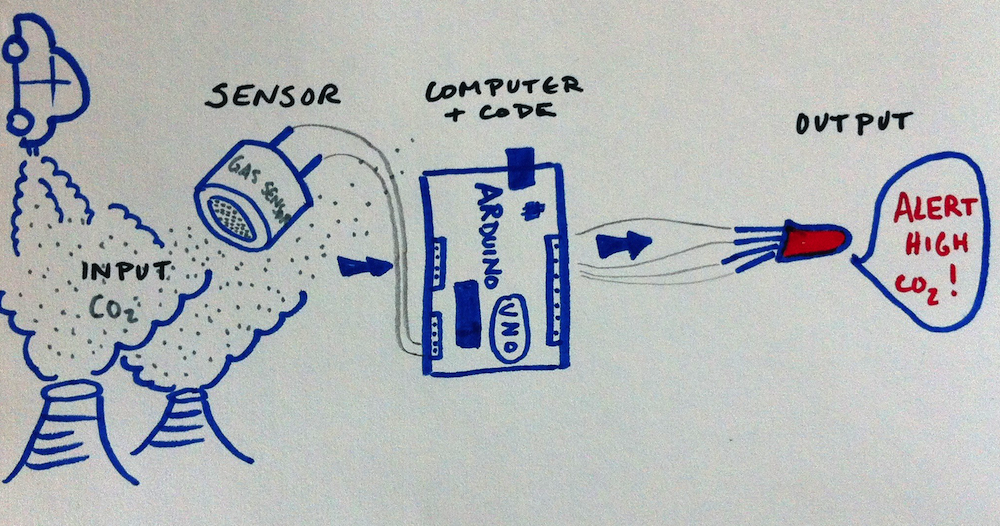
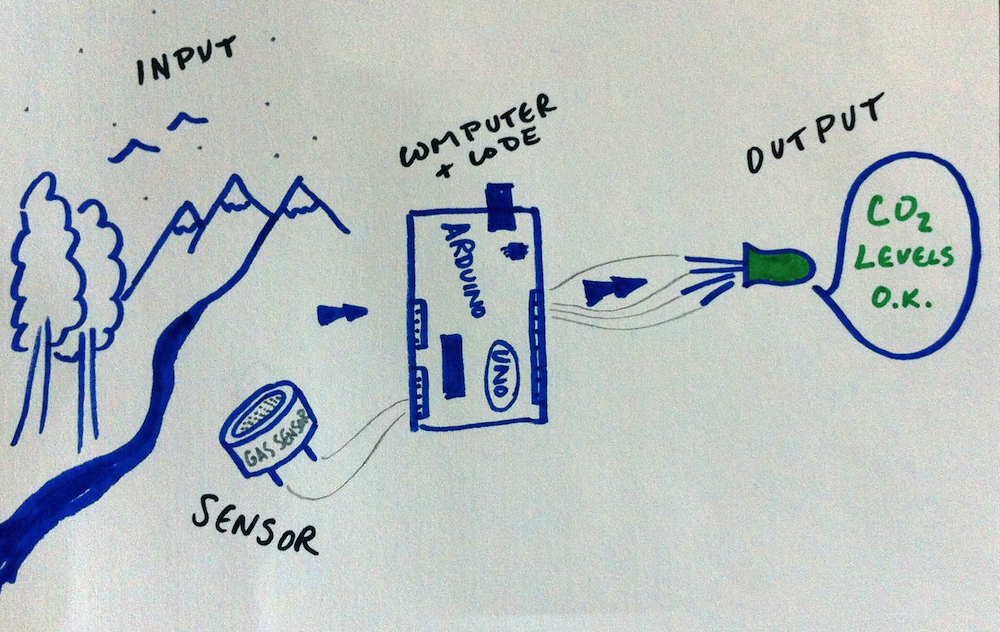
When you are little, you don’t want to wait. You want to cut up some paper and glue it to the moon. You want to get your hands dirty. You want to (with a little assistance, maybe) make a light blink, attach it to a CO2 sensor, put it inside a balloon full of helium, and send it into the sky. That way you can figure out how much CO2 those big cars are coughing out.
I had the chance to do some heavy learning over the weekend as a mentor for children’s workshops, so I saw kids’ impatience firsthand. Hackidemia organized the workshops during the Singularity University EU Summit in Budapest, with the goal of bringing the possibilities of complex technology to children. The Creator Kit has a similar goal, to bring Arduino and electronics to children. The topics are tough, though!
My main takeaway was that teaching kids can be more complex than the technology. Here I outline some of my issues and provide some tips that you can use while using the Creator Kit with your family.
Using the Creator Kit with Your Kids
During the Air Pollution Workshop, I saw that one of the main barriers to teaching youth was keeping their attention. If you asked me to explain something, chances were that I’d quickly slip into my natural tendency toward dry, theoretical, and factual information (in lots of detail). Long story short: that didn’t work so well with 10 year olds. I got this look:

And I noticed over at the next table the mentor Clément got these looks:

What was he doing differently? What can you do differently when you play with children and the Creator Kit?
2 things mainly: metaphors and questions.
Explain via Metaphors
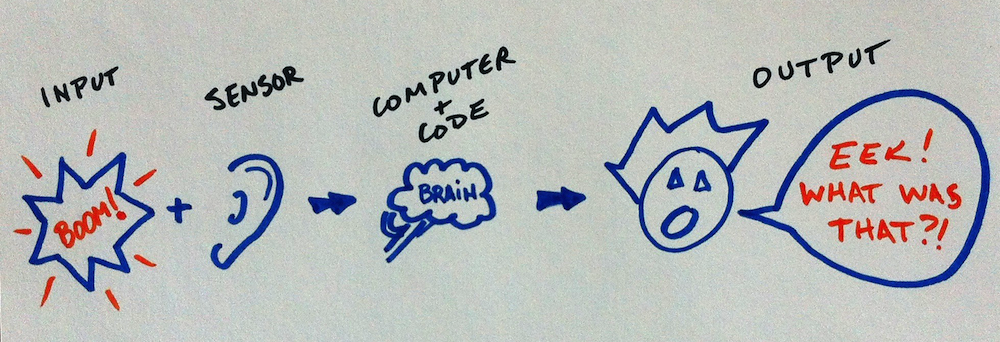
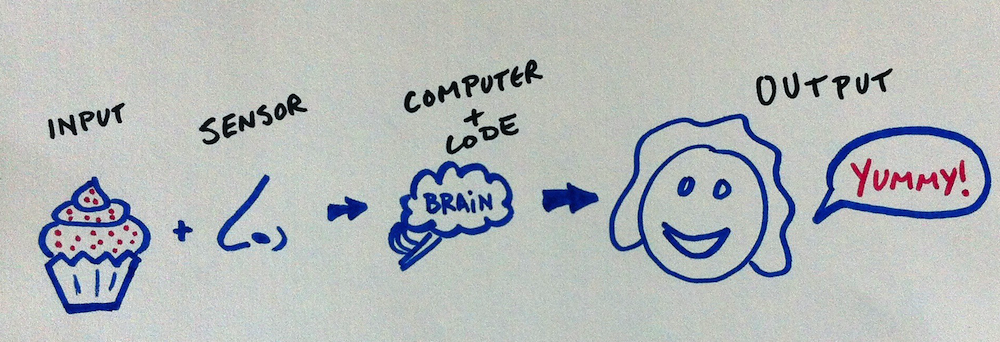
So you want to get the idea of an Arduino across. Ok, how about forgetting about the pins for the time being, and instead making a diagram like this. Extra kudos if you make the diagram on the spot and say a couple of words about each piece along the way.
Engage via Questions
Imagine you are at a cocktail party. To learn about another guest, you probably wouldn’t say, “Tell me everything about you, ordered by year, and please do not stop talking for at least 45 minutes. I do not want the chance to add anything, discuss anything, or ask you any questions.” Nope - instead you would probably ask a series of questions, which lead you to an enjoyable exchange where the person felt like they could express themselves.
Let’s apply this to children. Put the tools in their hands and ask them questions about it. Let them ask you questions. When they answer your questions about the Creator Kit, they are learning by doing and answering.
Do you think there is more CO2 in the air at street level or at the top of a building?
If you make it to Mars, what will you have to take with you from Earth?
Oh, so you say you want to be a lawyer when you grow up? Well, ever consider being a lawyer for robots?
With the Creator Kit, you might use it with your children. You should use it with your children. Use these tips! Engage them in the kit, play with the content, and get creative. The Creator Kit is a perfect jumping off point, so now it’s your turn to take it to the next level and keep them engaged.
Hello friends of Fritzing in Seoul! Guess who’s in town?
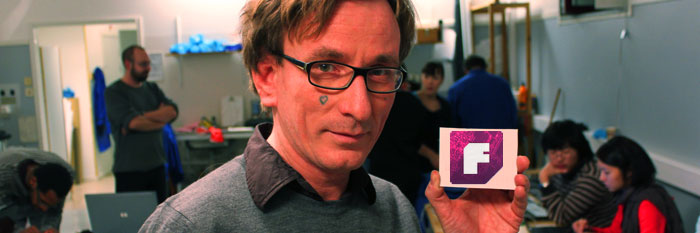
It’s Fritzing co-founder and godfather Reto :) He is visiting Seoul from today till Friday 6th of December and he will be more that happy to meet you and chat with you about Fritzing, what projects you use it for, how you use it, your feedback, suggestions to improve our products and services offering, and if you are nice (which you definitely are) he might even offer you a goodie.
For those who don’t know Reto, he is someone who’s incredibly passionate and smart about everything he does (especially Fritzing), but here is a short summary of what he does:
Reto is the founder and design director of IxDS, responsible for the overall design strategy. He is a Professor at the University of Applied Sciences in Potsdam, where he teaches “Physical Interaction Design” and researches innovative, bodily-focused approaches to Human-computer interaction. Reto has previously worked as an Associate Professor with the Interaction Design Institute in Ivrea, and as a designer/researcher with Sony in Tokyo and Ideo in San Francisco. He studied Industrial Design at UdK Berlin and Mechanical Engineering at TU Berlin. Prior to his studies, Reto had an apprenticeship as a stonemason in Southern Germany.
Drop us a comment and we’ll get you in touch with him ;)
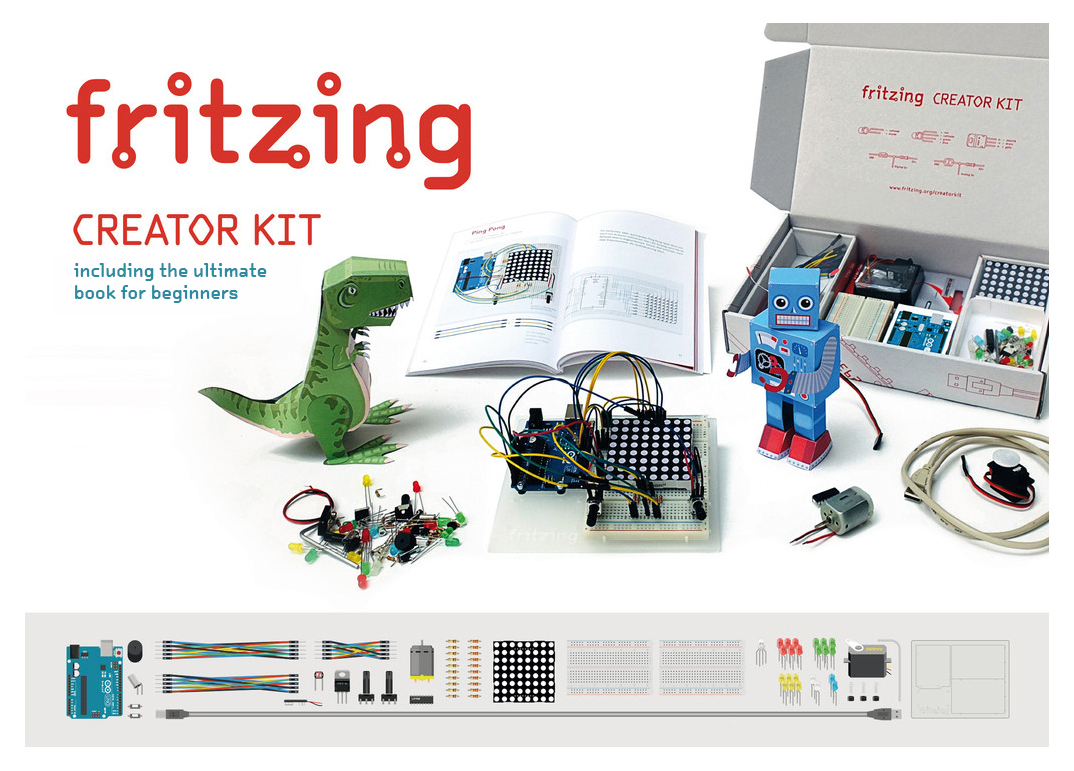
For a long time it was unfortunately very expansive for our customers of the US and of Asia to order our products like the Fritzing Creator Kit. Now we’ve found a partner, who will fill the gap. We are very happy to welcome Seeed Studio as a reliable company selling our Kit.
Direkt Link to the Fritzing Creator Kit at Seeed Studio.
Howdy!
We thought we should delight our readers a little by showing some dainties of creative electronics. Yummy.
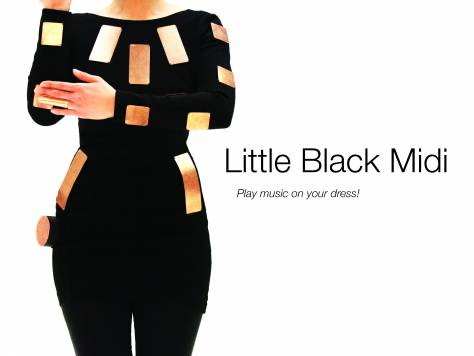
This week we want to start with the awesome Little Black Midi.
The Little Black Midi is a dress for singers and instrumentalists performing on stage. Equipped with copper plates, it will activate midi samples being played when the singer touches the plates with his/her copper ring. The dress enables the musician to combine singing, making music as well as dancing while being on stage.
The Little Black Midi was developed by Naomi Knopf while doing a class on musical interfaces held by Stefan Hermann in 2012/13 at the FH Potsdam.
Here you can see her performing a song with the dress:
https://www.youtube.com/watch?feature=player_embedded&v=6yY9UieIcjM
The dress was realized with the Arduino software, a teensy, the Ableton programme and a lot of patience and trial and error. Congratulations on the dress, Naomi!